5 Portrait Drawing Mistakes That Keep Beginners Stuck (And How to Fix Each One)


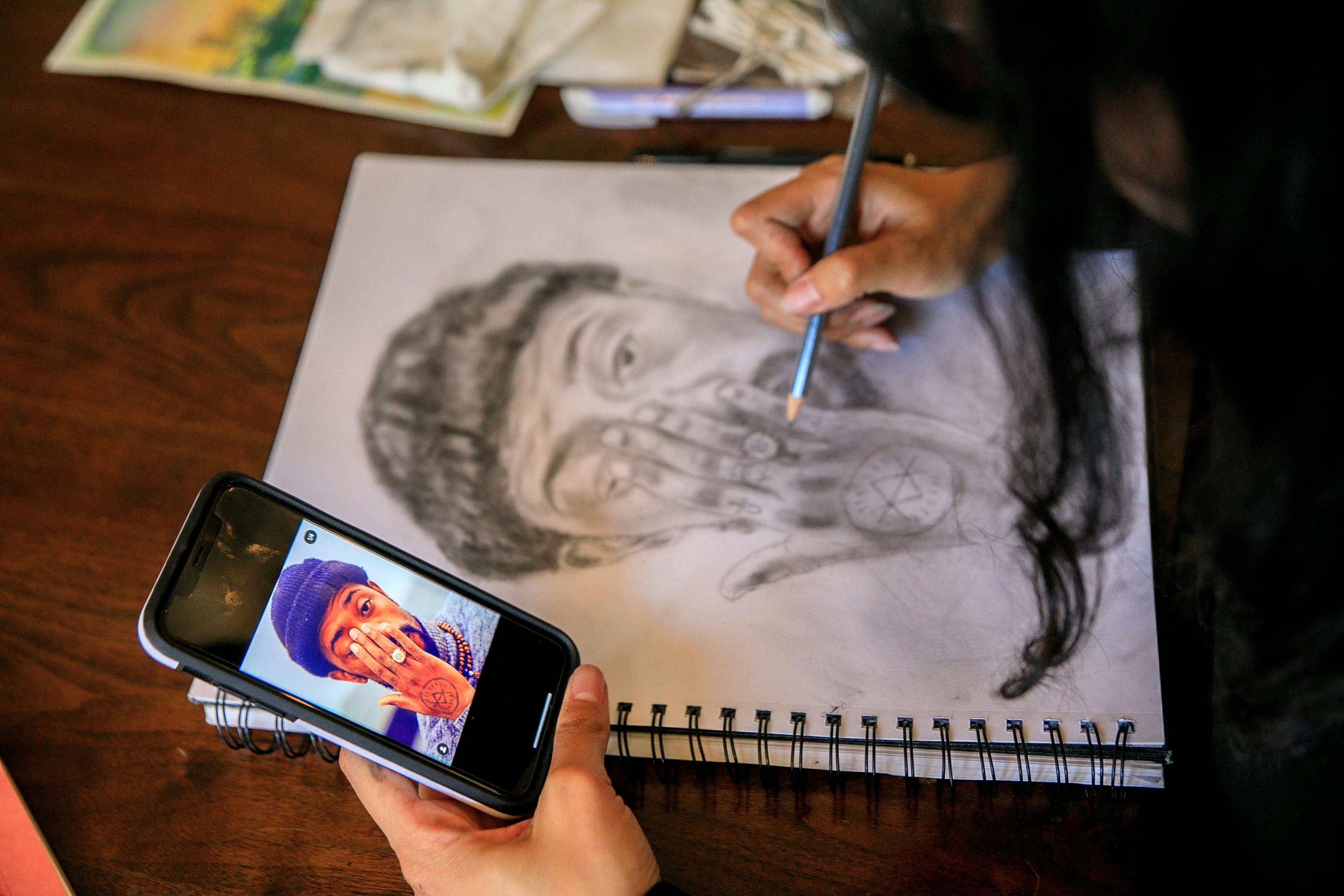
Drawing portraits can feel exciting and wildly frustrating at the same time.
The eyes look decent. But the mouth sits wrong. The shading is smooth, but somehow the whole face feels flat. You followed a reference photo. You took your time. And still, something is off.
Sound familiar?
When I started drawing portraits at 25, working full-time with zero art background, I hit every single one of these mistakes. My tool kit was a mechanical pencil, a few graphite sticks, and an old notebook. I practiced on Saturdays only. And for the first two weeks, my drawings looked nothing like the faces I was trying to capture.
It took me 7 weeks and 14 portraits to figure out what was actually going wrong. The answer was not my hands. It was how my brain was processing what I saw.
The good news? Every one of these portrait drawing mistakes has a specific, learnable fix. Once you understand why your brain trips you up, you can start working with it instead of against it.
Here are the 5 portrait drawing mistakes I see beginners make every single time, and the specific fix for each one.
1. Drawing what you think a face looks like, not what you actually see
This is the big one. Every person who picks up a pencil for the first time draws the same thing: not the face in front of them, but the face their brain memorized in childhood. Almond-shaped eyes. An oval head. A curved line for the mouth. These are symbols, shorthand the brain developed years ago and never updated.
Betty Edwards, the art educator behind Drawing on the Right Side of the Brain (which has sold over 3 million copies and is used as a standard text in art schools worldwide), calls this the "symbol system." Her research at California State University showed that the brain's verbal, analytical side labels every feature it sees: "that's a nose," "that's an eye." Then it substitutes a stored symbol instead of letting your eyes record the actual shapes.
I wrote about this shift in detail in draw what you SEE, not what you THINK you see. It is the single most important concept in portrait drawing.
The fix: Flip your reference photo upside down before you draw it. When the image is inverted, your brain can not recognize faces quickly enough to substitute symbols. You start seeing actual curves, angles, and edges instead. Edwards' upside-down drawing exercise is the single fastest way to prove to yourself that the barrier is not your hand. It is your labeling brain. Try it once and compare the result to a right-side-up drawing of the same face. The difference will surprise you.
2. Jumping straight to details before building structure
Most beginners start with the eyes. They shade them carefully, move to the nose, then the mouth, and try to connect everything at the end. The problem? By the time they reach the jawline, the proportions are already off. The eyes sit too high. The nose is too long. The whole face drifts.
Professional portrait artists do the opposite. They establish the full structure of the head before drawing a single feature. Plumb lines (a vertical and horizontal center cross), the eye line, the nose line, the jaw angle. The features are the last things to appear, not the first.
The fix: Draw your center cross on both your reference photo and your paper before anything else. Mark the structural lines: eye line at the halfway point of the head, nose line halfway between eyes and chin, mouth one-third below the nose. Let the face emerge from the scaffold. If the skeleton is right, the features almost place themselves. Use your pencil at arm's length to compare distances on the reference to distances on your paper. This comparative measuring technique is called "sighting," and it catches proportion errors before they become permanent.
3. Overworking the shading (and killing the portrait)
Here is something that sounds wrong until you try it: the human brain is so good at reading light and shadow that it will complete a face from the slightest tonal clue. Your job is not to render every shadow in full detail. It is to place just enough accurate tonal information for the viewer's brain to do the rest.
Over-shading flattens a portrait. It removes the air, the light, the life from the face. Most beginners shade feature by feature, pressing harder in dark areas and lighter in bright ones. What they should be doing is treating shadows as shapes, the same way they would treat negative spaces.
The fix: Before you shade anything, squint at your reference until all detail blurs into a two-tone map of light and dark. Identify the three biggest shadow shapes. Block those in with your 4B pencil in light passes. Leave highlights as bare paper. Then step back and squint every five minutes. When you can see the face emerging, stop. That is the hardest instruction in drawing: knowing when to put the pencil down. I wrote a full step-by-step tutorial on this: how to shade a portrait without overworking it. If shading is where your portraits fall apart, start there.
4. Cramming two days into one sitting
When people miss a practice session, they try to make up for it by doing double the work the next day. This feels productive. It is not.
Research on the spacing effect, a phenomenon studied since the 1880s and confirmed across hundreds of experiments, consistently shows that practice distributed over time produces stronger, longer-lasting memories than the same amount of practice crammed together. A 2016 study published in Psychological Science by Mazza et al. found that when learners slept between two study sessions, it cut the practice needed in half and produced better long-term retention.
This applies directly to drawing. Your brain consolidates motor skills during sleep. When you draw for 2 hours today and skip tomorrow, you lose the consolidation window that would have locked in what you practiced. Two 1-hour sessions with a night of sleep between them will always beat one 2-hour session.
The fix: If you miss a day, just pick up where you left off the next day. Do not double up. Spacing is not a scheduling inconvenience. It is the mechanism that makes the skill stick. I use a Saturday batching system that builds on this principle: 6 focused hours once a week instead of scattered daily sessions.
5. Drawing someone you know as your first subject
This sounds backward. "I want to draw my daughter" is a beautiful reason to learn. But drawing someone you love as your very first portrait introduces a problem you can not fix with technique: emotional pressure. You need the likeness to be recognizable, which makes every line feel high-stakes, which breaks your concentration, which produces a worse drawing, which makes you want to quit.
The fix: Practice on strangers first. Use reference photos of faces you have no emotional attachment to. Free reference sites have thousands of high-quality portrait photos with clear lighting, which is exactly what you need when you are building a new skill. You need full permission to be bad. Strangers give you that freedom. Save the person you love for when your hand can match what your eyes see. That drawing will mean more because of the practice that came before it.
What to practice first
If you are making all 5 of these mistakes (and most beginners are), do not try to fix them all at once. Start with mistake number 1. Do one upside-down drawing. Then do a right-side-up drawing of the same face and compare. That single exercise will show you the gap between what your brain assumes and what your eyes actually see. Everything else follows from that shift.
Once you can see edges accurately, move to structure (mistake 2), then shading (mistake 3). Give yourself at least 3 to 5 practice drawings at each stage before moving on. You do not need to be perfect. You just need to feel the shift happening, the moment where your hand starts recording what your eyes see instead of what your brain assumes. That shift is unmistakable once you feel it. The 7 portrait drawing tips I wish I had on day one covers the practical techniques for each stage.
The real mistake underneath all five
Every one of these mistakes comes from the same root: trusting what your brain assumes instead of what your eyes actually see. Your brain says "that is a nose." Your brain says "shade more." Your brain says "do two days at once." Your brain says "draw your daughter first."
Drawing is the practice of overriding those assumptions with observation. Once you understand that, the fix for every mistake is the same: slow down, look at what is actually there, and draw that instead.
I went from stick figures to 14 completed portraits in 7 weeks. Not because I found some hidden talent. Because I learned to see. If you want a structured path through all of this, grab the free 5-step portrait process checklist or take a look at the workbook I built for beginners.