7 Portrait Drawing Tips I Wish I Had on Day One


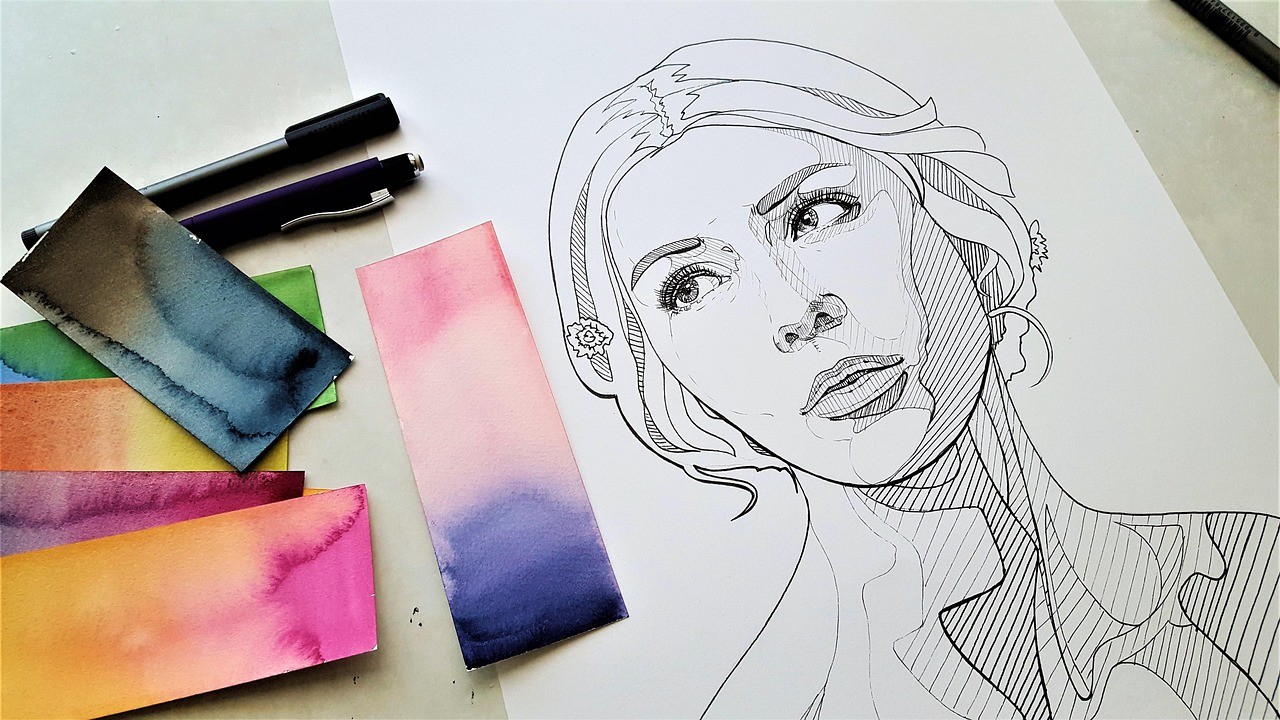
When I started drawing portraits, I wanted someone to just tell me the handful of things that actually matter. Not a 40-hour course. Not a theory lecture. Just the tips that would have saved me from redrawing the same face six times.
Here are the 7 portrait drawing tips I wish I had on day one. Each one is something I learned the hard way during my first 14 portraits.
1. Squint before you shade
This is the single fastest way to improve any portrait. Before you touch your pencil to the shadow side of a face, squint at your reference photo until everything blurs into two or three big shapes of light and dark. Those shapes are your map. If you shade without squinting first, you end up rendering every pore and crease with equal attention, and the portrait goes flat.
Squinting filters out detail and reveals structure. It shows you where the big shadow masses live. Block those in first. Details come last.
2. The eyes sit halfway down the head, not near the top
Almost every beginner places the eyes too high. It feels wrong to put them at the midpoint of the skull, but that is where they sit on a real human head. The forehead takes up more space than your brain expects.
Draw a light horizontal line at the halfway point of your head shape before you do anything else. That line is your eye line. Everything else anchors from it: nose halfway between eye line and chin, mouth one-third of the remaining distance below the nose. Getting this one proportion right fixes half of what makes beginner portraits look "off." (This is one of the 5 portrait drawing mistakes I see beginners make most often.)
3. Draw the shape of the shadow, not the name of the feature
When you look at a nose and think "nose," your brain substitutes a symbol it memorized in childhood. Betty Edwards, whose book Drawing on the Right Side of the Brain has been a standard art school text for over 40 years, calls this the "symbol system." Your brain shortcuts the observation process by labeling what it sees and drawing the label instead of the actual shape.
The fix is to stop naming things. Instead of drawing "a nose," draw the triangle of shadow under the nose bridge. Instead of drawing "an eye," draw the dark shape where the upper eyelid meets the crease. When you draw the shape of the shadow, the feature appears on its own. I go deeper into this principle in draw what you SEE, not what you THINK you see.
4. Use the pencil as a measuring stick, not just a drawing tool
Hold your pencil at arm's length, close one eye, and use the tip and your thumb to measure distances on your reference. How wide is the nose compared to one eye? How far is the corner of the mouth from the edge of the nostril? These comparative measurements are called "sighting," and professional portrait artists use them constantly.
You don't need to be mathematically precise. You just need to check relationships. If the mouth is 1.5 eye-widths across in the reference, it should be 1.5 eye-widths across in your drawing. This one habit catches proportion errors before you commit to them in ink or heavy graphite.
5. Work the whole face at once, not one feature at a time
It's tempting to finish one eye completely before moving on. But when you finish the left eye in full detail and then start the right, you have no room to adjust if the spacing is wrong. You've already committed.
Instead, rough in all the features at the same level of completion before refining any single one. Think of it like building a house: foundation first, walls second, paint last. If you paint one room before the walls are up, you're going to be repainting.
6. Leave the highlights alone
One of the most counterintuitive tips in portrait drawing: the brightest areas of the face are the paper itself. Don't shade them, don't touch them, don't smooth over them "just to blend." The tip of the nose, the ridge of the cheekbone, the catch light in the eye, these highlights are what give a portrait its sense of light and life.
Beginners often shade the entire face and then try to erase highlights back in. It never looks as clean. Protect your lights from the start. If you're right-handed, work from left to right across the face so your hand doesn't smudge areas you've already left bright.
7. Stop when your gut says stop
This is the tip nobody tells you about because it sounds unscientific. But the single biggest killer of good portraits is overworking. There's a moment, usually about 80% of the way through, where the face looks alive and present. If you keep pushing past that point, chasing perfection, you grind the life out of it.
The instinct to "fix one more thing" is almost always your perfectionist brain, not your observational brain. When the portrait feels close, put the pencil down. Walk away for 10 minutes. Come back with fresh eyes. If it still looks alive, it's done.
The tip underneath all the tips
Every one of these comes back to the same principle: see what's actually there, not what you think is there. Squinting, measuring, drawing shadows instead of labels, working globally instead of locally, these are all techniques for bypassing the part of your brain that wants to shortcut the observation process.
Drawing is seeing. The pencil just records what your eyes find.
I learned all of this over 7 weeks and 14 portraits, using one book and $15 in supplies. If you want the structured version of this process, my workbook Zero to Portraits in 7 Days walks you through it day by day.